

Mark Lowey MSc FDS BDS MOrth DOrth LDS RCS (Eng.) MNTF
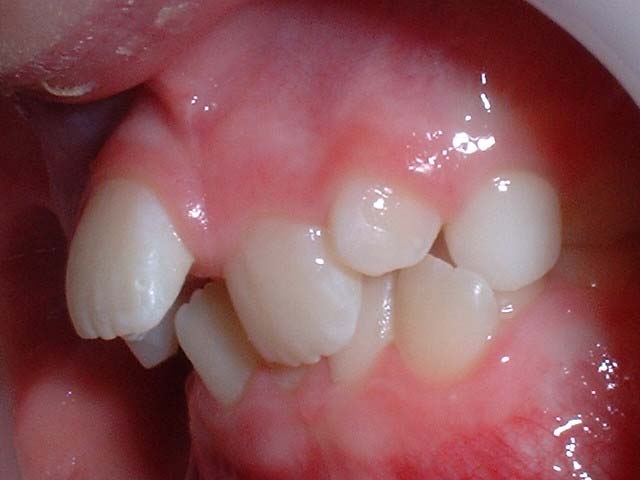
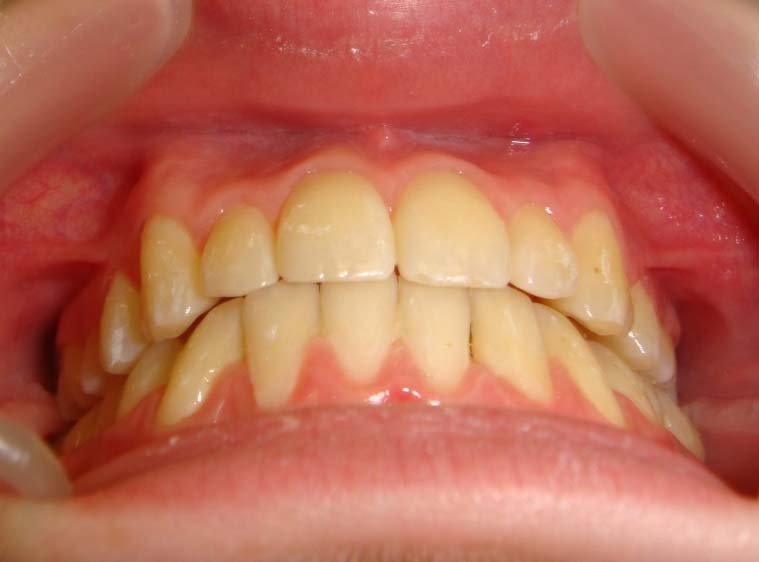
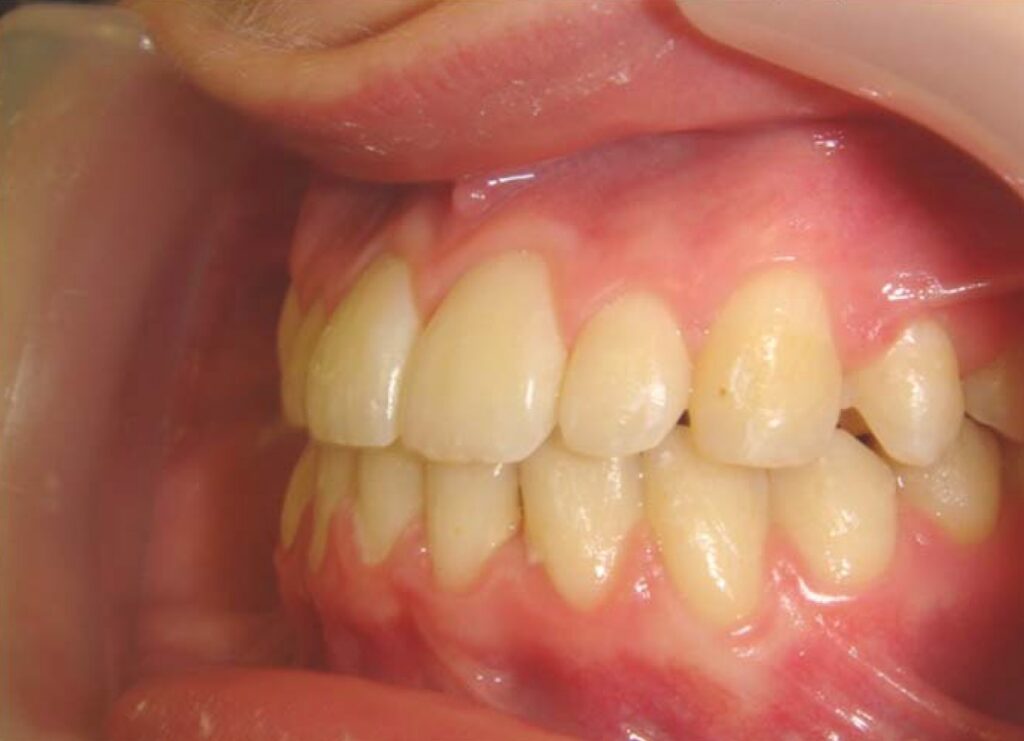
Some patients with smaller lower jaws benefit from using “functional appliances”. This is a form of treatment which attempts to influence and encourage lower jaw growth. It is a form of treatment I personally have had a lot of success with. Successful treatment results in far fewer premolar extractions and stops the need for head gear.

I have patients who have been advised they require extractions and head gear which have been successfully treated without either.
Patient advised they needed four premolar extractions and had used head gear for 14 hours per day for nine months.


Facial improvement.

Another patient successfully treated without premolar extractions or head gear.

Am J Orthod Dentofacial Orthop. 2000 Jul;118(1):24–33.
Posttreatment changes after successful correction of Class II malocclusions with the Twin Block appliance
Mills CM, McCulloch KJ.
Source
Faculty of Dentistry, University of British Columbia, Canada.
Abstract
This investigation is a continuation of a previously published study assessing the treatment effects of the Twin Block appliance. All active treatment was carried out during the mixed dentition stage (mean starting age, 9 years 1 month) with final follow-up for the treatment group occurring in the permanent dentition (mean age, 13 years 1 month).
Of the original group consisting of 28 consecutively treated severe skeletal Class II patients, 26 were available for follow-up. A comparison group of 28 untreated Class II subjects matched for age, sex, and vertical facial type was obtained from the Burlington Growth Centre according to the original study design. Of these 28 control subjects, 24 had 4-year follow-up cephalometric films available. The mean age of the controls was 12 years 11 months at the time of follow-up.
During the active treatment phase, the Twin Block group experienced an average increase in mandibular unit length of 6.5 mm over a mean of 14 months (annualized rate of change of 5.6 mm per year). In comparison, the control group experienced a 2.3 mm increase in mandibular unit length during the 13-month observation period (annualized rate of 2.1 mm per year).
In the posttreatment phase, the change in mandibular unit length for the Twin Block group was 6.0 mm over a 36-month period (annualized rate of change of 2.0 mm per year). The control group experienced an average increase in mandibular unit length of 6.7 mm over the posttreatment assessment period that was 34 months in duration (annualized rate of change of 2.4 mm per year).
Although there was a slight reduction in mandibular growth rate after treatment, much of the significant increase in mandibular length achieved during the active phase of treatment with the Twin Block appliance was still present three years later when the subjects had matured into the permanent dentition stage.
Comment in
Am J Orthod Dentofacial Orthop. 2001 Jun;119(6):10A–11A.
Am J Orthod Dentofacial Orthop. 1998 Jul;114(1):15–24.
Treatment effects of the Twin Block appliance: a cephalometric study
Mills CM, McCulloch KJ.
Source
Faculty of Dentistry, University of British Columbia, Vancouver, Canada.
Abstract
A clinical study was undertaken to investigate the treatment effects of a modified Twin Block appliance. Pretreatment and posttreatment cephalometric records of 28 consecutively treated patients with Class II malocclusions were evaluated and compared with an age- and sex-matched sample of untreated Class II control subjects.
The treatment group was considered to have severe skeletal Class II malocclusions and was treated using only the Twin Block appliance. Results indicated that mandibular growth in the treatment group was on average 4.2 mm greater than in the control group over the 14-month treatment period.
In addition, some dentoalveolar effects in both arches contributed to the overjet correction. No statistically significant increase in the SN–mandibular plane angle occurred during treatment and, in general, the magnitude and direction of the skeletal changes were found to be quite favourable.
Comment in
Am J Orthod Dentofacial Orthop. 1998 Nov;114(5):20A–21A.
© 27.1.14